
Snacks
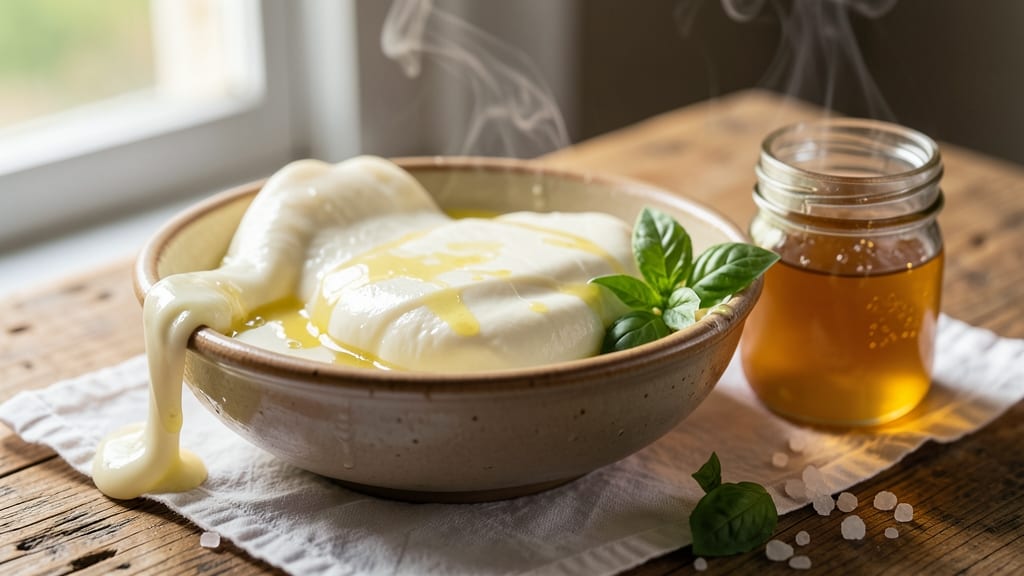
Making traditional mozzarella cheese at home transforms simple milk into that signature stretchy, milky curd we all love. The process—acidifying, heating, stretching—is both an art and a science, one I’ve perfected through countless batches of golden, elastic curds.
This recipe stays true to Campania’s roots while adapting for modern kitchens, whether you use raw milk or pasteurized alternatives.
The key to authentic mozzarella lies in precise temperature control and gentle handling of the curds. Rennet or vinegar initiates coagulation, while careful heating and stretching develop that signature texture.
Even beginners can achieve restaurant-quality results with patience and attention to detail—no cheese-making experience required. The reward? Fresh mozzarella that melts beautifully on caprese salads or pizza.
What sets this recipe apart is the traditional stretching technique, where hot curds transform into smooth, elastic strands when worked in warm whey. I’ll guide you through each step, from selecting the right milk to shaping perfect balls of mozzarella.
Storage tips ensure your cheese stays fresh for up to a week, preserving that just-made flavor.
Whether you’re a home cook or a cheese enthusiast, this method delivers mozzarella with the same qualities found in Italy’s best pizzerias. Let’s begin with the essential ingredients and tools—where tradition meets modern convenience.
Ingredients for traditional mozzarella cheese
Transform simple milk into authentic Campanian mozzarella with these essential ingredients.
| Ingredient | Amount | Notes |
|---|---|---|
| Whole Milk 🥛 | 4 cups | Pasteurized or raw, 3.25% fat preferred |
| Citric Acid 🍋 | ¼ tsp | Powdered form, food-grade |
| Rennet 🧀 | ¼ tsp | Liquid rennet, 160 strength |
| Diamond Crystal Kosher Salt 🧂 | ½ tsp | Fine grain for even dissolving |
| Lemon Juice 🍋 | 1 tbsp | Freshly squeezed, for acidification |
| Whey Powder 🥛 | 1 tbsp | Optional for texture enhancement |
| Extra-Virgin Olive Oil 🫒 | 1 tbsp | For coating finished mozzarella |
| Fresh Basil Leaves 🌿 | ¼ cup | Chopped, for optional garnish |
| Freshly Ground Black Pepper 🌶️ | ¼ tsp | Freshly cracked for best flavor |
| Water 💧 | 1 cup | For rinsing curds |
| Ice Water Bath ❄️ | 2 cups | For rapid temperature control |
The milk is your foundation—whole milk at 3.25% fat gives the best texture, but you can use 2% if that's all you have. Whole Foods or local dairies often carry the higher-fat version, and it makes a noticeable difference. If using raw milk, heat it gently to 90°F first to kill any bacteria. The citric acid and lemon juice work together to acidify the milk, which is crucial for proper coagulation. I always grab Diamond Crystal kosher salt for this recipe—it dissolves evenly and doesn't leave grainy bits. For rennet, liquid form works best and gives you more control over the coagulation time.
No rennet? Vinegar or lemon juice alone can work, though the texture won't be quite as authentic. The whey powder is optional but helps replicate that traditional Italian flavor—Trader Joe's carries it if you can't find it elsewhere. If you're using vinegar as a substitute, add 1 tbsp per 4 cups of milk and let it sit for 5 minutes before adding rennet. For the olive oil, extra-virgin is non-negotiable—it adds richness and pairs perfectly with the fresh mozzarella. The basil and black pepper are just for finishing, but trust me, they elevate everything.
Fresh mozzarella is best enjoyed within 3-4 days when stored in whey or brine in the fridge. For longer storage, freeze the mozzarella balls in water—3 months max. To reheat, place frozen mozzarella in warm water for 1-2 minutes. I always portion mine into small containers with a little extra whey to keep it moist. The first batch might take some practice, but once you nail the stretching technique, you'll be making mozzarella like a Neapolitan chef.
Why You'll Love This Recipe
- Pantry-Friendly Magic: I swear by this recipe because it turns five ingredients from my fridge into something restaurant-worthy. No special equipment—just a pot, thermometer, and a little patience. The citric acid and lemon juice give it that bright, tangy kick without needing fancy additives.
- Melty Perfection: That stretchy, gooey pull? It’s all in the rennet and the careful heating of whole milk. Fresh mozzarella out of your own kitchen tastes nothing like the waxy store-bought kind—it’s creamy, mild, and dangerously addictive when melted over pizza or in caprese salad.
- Weeknight Superstar: Make a batch on Sunday, and you’ve got cheese for sandwiches, pasta, or grilled veggies all week. It keeps well wrapped in brine, so no last-minute grocery runs. Honestly, I double the recipe just to have it on hand—it’s my secret weapon for lazy nights.
- Budget Cheese Boost: Skip the $8 blocks and make mozzarella for pennies per serving. Whole milk and salt are the only splurges, and the rest? Basic pantry staples. Between us, this is how I feed my family real cheese without breaking the bank—no regrets, just flavor.
Step-by-step instructions for traditional mozzarella cheese
Here's how to craft authentic mozzarella from scratch—just like Italian artisans do.
Acidify and Heat the Milk
In a heavy-bottomed stainless steel pot, combine the 4 cups whole milk with the 0.25 teaspoon citric acid and 1 tablespoon lemon juice. Stir gently to dissolve completely. Place the pot over medium heat and bring to 185°F, stirring occasionally to prevent scorching. You'll notice small bubbles forming around the edges—this indicates proper heating.
I always use a candy thermometer for precision—this temperature is critical for proper coagulation. Once heated, remove the pot from heat and let it rest for 5 minutes to stabilize. This acidification step mimics traditional Italian techniques and helps create that signature stretchy texture we're after.
Add Rennet and Coagulate
While the milk rests, dissolve the 0.25 teaspoon rennet in 1 tablespoon cool water (from the 1 cup reserved). Return the milk to low heat and gently stir in the rennet solution. Stir just enough to distribute evenly—no more than 10-12 strokes—then let it sit undisturbed for 5 minutes to allow the rennet to disperse.
Cover the pot and let it coagulate for 30-45 minutes at 105-110°F. You'll know it's ready when the milk forms a clean, firm curd that separates completely from the whey. I check by inserting a clean knife—if it comes out clean with a slight resistance, the curds are perfect. If it wobbles like jelly, give it another 10 minutes.
Cut and Cook the Curds
Using a clean knife or curd cutter, slice the curds into ½-inch cubes. Return the pot to medium heat and gently stir the curds for 5 minutes to distribute the heat evenly. Gradually increase heat to 105°F and let the curds cook for 30-40 minutes, stirring occasionally to prevent sticking.
During this time, the curds will shrink and release more whey. When they reach 120°F, drain them in a colander lined with cheesecloth, reserving the whey for other uses. The curds should be firm but still tender—like warm custard. If they feel too soft, cook them another 5 minutes. This cooking step develops the texture that makes mozzarella so distinctive.
Stretch and Shape the Mozzarella
Transfer the hot curds to a clean bowl and sprinkle with the 0.5 teaspoon diamond crystal kosher salt and 1 tablespoon whey powder. Using sanitized hands, knead the curds gently until smooth. Now comes the magic: slowly drizzle in ½ cup hot whey (from the reserved whey) while kneading and stretching the curds.
Here's the traditional technique: when the curds reach 140°F, they'll begin to stretch like elastic. Keep stretching and folding until you achieve that signature mozzarella texture—smooth, glossy, and springy. If it feels too dry, add more whey; if too sticky, let it cool slightly. This stretching creates the protein matrix that gives mozzarella its meltability.
Finish and Serve
Once stretched, shape the mozzarella into balls or logs and immediately submerge in the 2 cups ice water bath to halt cooking. Let it cool for 10 minutes, then transfer to a bowl and coat with the 1 tablespoon extra-virgin olive oil. This oil preserves freshness and adds a delicate flavor.
For serving, gently press the mozzarella into a mold if desired, then chill until ready to use. Garnish with the chopped 0.25 cup fresh basil leaves and freshly cracked 0.25 teaspoon black pepper just before serving. Traditional mozzarella should be mild, creamy, and melt beautifully—perfect for caprese salads, pizzas, or fresh eating with a drizzle of olive oil.
Pro Tips For Making Traditional Mozzarella Cheese
- Heat Milk Slowly: Bring your whole milk to 88°C (190°F) gradually—no faster than 1°C (2°F) per minute. I learned this the hard way when I rushed it, and the curds turned rubbery instead of silky. A double boiler or immersion circulator keeps things steady.
- Test Rennet First: Before adding rennet, mix it with ¼ cup cool water (not milk) to dissolve completely—no clumps. I once skipped this, and the curdling was uneven. Stir it into the warm milk gently in a figure-8 motion, then let it sit undisturbed for 5 minutes.
- Acidify with Precision: Add citric acid last—after heating the milk and just before stretching—so it doesn’t start curdling prematurely. A splash of lemon juice (1 tsp) can help, but measure it: too much makes the mozzarella tough. I now use a scale for the citric acid (0.02% of milk weight) for consistency.
- Stretch in Hot Water: Use water at 79–82°C (175–180°F)—hot enough to keep the curds pliable but not scalding. I used to eyeball it and ended up with gummy mozzarella. A thermometer is worth it here; the stretch should feel like warm taffy, not dough.
Wine and beer pairings for this dish
White Wine Pairings
Fresh mozzarella's delicate, milky sweetness pairs beautifully with crisp white wines that highlight its creamy texture. I always reach for a Vermentino from Sardinia—its bright acidity and citrus notes cut through the richness without overpowering.
The minerality in these wines complements the cheese's clean finish, making every bite feel fresh. 🍷
For a more aromatic option, try a Fiano di Avellino from Campania, the birthplace of mozzarella. Its floral and almond notes mirror the cheese's subtle sweetness, creating a harmonious match. Serve both wines slightly chilled (45-50°F) to enhance their refreshing qualities alongside your homemade mozzarella.
Light Beer Options
A crisp Italian lager, like Peroni or Birra del Borgo, is my go-to beer pairing. The subtle malt sweetness and light carbonation cleanse the palate between bites of mozzarella, while the low bitterness lets the cheese's natural flavor shine.
For a craft option, a Belgian witbier with its coriander and orange peel notes adds a fun contrast to the creamy texture. 🍺
Avoid heavy stouts or IPAs—their bold flavors can overpower the delicate mozzarella. Instead, opt for sessionable beers with 4-5% ABV that won't leave your palate feeling overwhelmed. I like to serve these beers at 40-45°F to enhance their crispness and complement the cheese's mild sweetness.
Red Wine Surprises
Yes, you can pair mozzarella with red wine—just choose the right one! A light-bodied Chianti or Pinot Noir from Tuscany works surprisingly well, especially when the cheese is served with tomato-based dishes.
The acidic structure of these wines cuts through the fat, while their earthy notes complement the cheese's mild flavor. Serve at 55-60°F to let the wine's brightness shine.
For a more modern twist, try a Gamay from Beaujolais. Its juicy red fruit flavors and silky texture make it an unexpected but delightful match for fresh mozzarella. The key is to balance the wine's acidity with the cheese's creaminess—avoid heavy, tannic reds that will clash.
Non-Alcoholic Pairings
Don't overlook non-alcoholic options! A sparkling blood orange soda, like San Pellegrino Aranciata Rossa, adds a refreshing citrus note that brightens the mozzarella's mild flavor. The effervescence also cleanses the palate between bites.
For a more herbal option, try hibiscus iced tea with a splash of lemon—its tartness balances the cheese's creaminess beautifully. 💫
For a classic Italian approach, serve mozzarella with a chilled glass of San Pellegrino Limonata. The lemon-lime flavor enhances the cheese's natural sweetness, while the carbonation keeps things feeling light and refreshing.
These pairings work just as well for kids or those avoiding alcohol while still elevating the dining experience.
Nutrition facts
Frequently asked questions
Why does my mozzarella turn out rubbery instead of stretchy?
Rubbery mozzarella usually means the curds weren't stretched at the right temperature (140°F). Keep stretching gently until the curds feel smooth and elastic—like warm taffy. If they cool too quickly, reheat them with more warm whey (160°F) before stretching again. Patience is key!
Can I make mozzarella without rennet?
Yes! Use 1 tablespoon vinegar or lemon juice per 4 cups milk instead. The acid will curdle the milk, though the texture won't be as authentic. For best results, add the acid and let it sit for 5 minutes before heating. The curds will be softer but still edible.
How do I store homemade mozzarella to keep it fresh?
Store mozzarella in its whey (or brine) in an airtight container in the fridge for 3-4 days. For longer storage, freeze the balls in water for up to 3 months. To reheat, soak frozen mozzarella in warm water for 1-2 minutes—it’ll spring back to life!
What’s the secret to perfect stretching?
Work the curds at 140°F—they should feel warm but not hot. Knead and stretch continuously, adding whey as needed to keep them pliable. Think "fold and pull" like taffy, not "mash and tear." The curds will transform from grainy to smooth and elastic in 3-5 minutes of focused work.
Can I use powdered milk instead of fresh?
Not for authentic mozzarella—the fat content and protein structure are critical. Powdered milk lacks the 3.25% fat needed for proper curd formation. If you must, try whole milk powder reconstituted with water, but the texture won’t be as creamy. Stick to fresh whole milk for best results!