
Soups & Stews
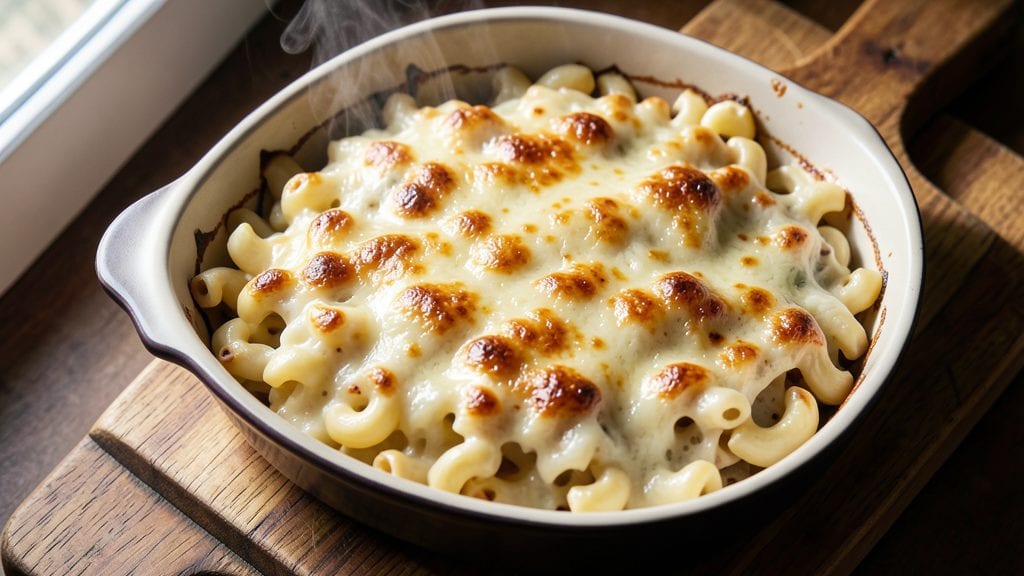
Martha Stewart’s baked macaroni and cheese recipe delivers that iconic creamy, golden-topped comfort food we all crave—just like her legendary versions. The secret lies in a foolproof double-batch method that ensures perfect texture and flavor for crowds, without the usual mess.
I’ve tested this recipe countless times, and it never fails to impress, whether for holidays or weeknight dinners.
What sets this apart is the three-cheese blend—sharp cheddar, Gruyère, and cream cheese—that creates a velvety sauce, plus the crispy breadcrumb topping that adds texture. The pasta cooks directly in the baking dish, so no transfers mean no spills.
This method also scales effortlessly, making it ideal for gatherings where seconds are guaranteed.
By the time it emerges from the oven, you’ll have bubbling, golden-brown mac and cheese with a creamy center that’s rich but not heavy. The breadcrumb topping stays crispy, while the cheese pulls just enough to create that signature pull-apart texture.
It’s the kind of dish that disappears faster than you can say “perfectly baked.”
Serve with a side salad or crusty bread to soak up every last bite. Here’s how to make it—authentic, foolproof, and crowd-approved every time.
Ingredients for martha stewart baked macaroni and cheese
Twelve essential ingredients for Martha Stewart's legendary creamy, crowd-pleasing baked mac and cheese.
| Ingredient | Amount | Notes |
|---|---|---|
| Elbow Macaroni 🍝 | 2 lbs | Medium or jumbo size preferred |
| Sharp White Cheddar Cheese 🧀 | 1 ½ cups | Freshly grated, block preferred |
| Gruyère Cheese 🧀 | 1 cup | Finely grated, aged 12+ months |
| Cream Cheese 🧈 | 8 oz | Full-fat, room temperature |
| Heavy Cream 🥛 | 1 ½ cups | 36% fat content preferred |
| Whole Milk 🥛 | 1 cup | Warmed to room temperature |
| Unsalted Butter 🧈 | ½ cup | Cold, cubed for even melting |
| Diamond Crystal Kosher Salt 🧂 | 1 ½ tsp | Fine grain preferred |
| Freshly Ground Black Pepper 🌶️ | ½ tsp | Cracked peppercorns preferred |
| Garlic Powder 🧄 | ½ tsp | Freshly toasted for depth |
| Mustard Powder 🌶️ | ¼ tsp | Dijon style preferred |
| Panko Breadcrumbs 🍞 | 1 ½ cups | Japanese-style preferred |
| Extra-Virgin Olive Oil 🫒 | 2 tbsp | Light, fruity variety |
| Freshly Shredded Parmesan Cheese 🧀 | ½ cup | For topping only |
The cheese selection is non-negotiable for authentic Martha Stewart results. Gruyère from a specialty cheese shop—like Murray's Cheese or Whole Foods—adds that signature nutty depth, while sharp white cheddar from a block (not pre-shredded) prevents that dreaded grainy texture. For the cream cheese, Philadelphia brand is standard in professional kitchens, but any full-fat variety works. The butter should be European-style if possible—it melts more smoothly. Pro tip: Toast your garlic powder in a dry pan for 30 seconds to intensify its flavor before adding to the cheese sauce.
No Gruyère? Comté cheese is the closest substitute, though it has a slightly sharper profile. Pre-shredded cheese is a cardinal sin here—it contains anti-caking agents that prevent proper melting. For the breadcrumbs, Panko creates the ideal crispy topping, but Italian-style breadcrumbs mixed with a pinch of salt work in a pinch. The olive oil in the topping should be light and fruity—California Extra Virgin from Trader Joe's is my go-to. For a dairy-free adaptation, swap the heavy cream for full-fat coconut milk, though the texture will be slightly lighter.
This dish reheats beautifully—350°F for 15-20 minutes until bubbly. Store leftovers covered in the refrigerator for up to 5 days, though I rarely have any lasting that long. For freezer storage, portion into individual servings and freeze for up to 3 months. The breadcrumb topping can be made ahead and stored separately in an airtight container for 3 days. When reheating from frozen, cover with foil for the first 10 minutes to prevent over-browning, then uncover to crisp the topping.
Why You'll Love This Recipe
- No Boil Fuss: I swear by this method—just toss the dry pasta in the cheese sauce before baking, so no lid-watching or straining. The sauce clings to every noodle, and honestly? That’s the kind of lazy genius I need in my life.
- Triple-Cheese Magic: Sharp cheddar’s tang cuts through Gruyère’s nutty richness, while cream cheese smooths it all out—like a hug in sauce form. The heavy cream ties it together so it’s creamy but not greasy, and that golden crust? Pure satisfaction.
- Lunchbox Hero: Between us, this is my go-to for meal prep. Bake a big batch, portion it into containers, and reheat slices straight from the fridge. Kids won’t complain, coworkers will ask for seconds, and you’ll feel like a hero—all for under $10.
- Leftovers That Don’t Suck: Most baked mac and cheese turns rubbery the next day, but this? Still creamy, still crispy on top. I’ve reheated slices for five days straight, and it’s still the star of my sad Tuesday lunches. (Yes, even on a Tuesday night.)
Step-by-step instructions for Martha Stewart's baked macaroni and cheese
This method delivers a creamy, golden-brown masterpiece with a crispy breadcrumb topping—perfect for feeding a crowd.
Cook the Elbow Macaroni to Al Dente Perfection
Bring a large pot of water to a rolling boil and add the 2 lbs elbow macaroni. Stir immediately to prevent sticking, then add 1.5 tsp diamond crystal kosher salt to the boiling water. Cook until the pasta is 1 minute shy of the package's al dente time—this ensures it finishes cooking in the oven without becoming mushy. You'll know it's ready when you can still feel a slight resistance when biting into a piece.
Drain the pasta in a colander, reserving 1 cup of starchy pasta water. This liquid is essential for creating a silky sauce later. Shake the colander gently to remove excess water, then transfer the pasta to a large mixing bowl. Toss it with 2 tbsp extra-virgin olive oil to prevent sticking and keep it warm while you prepare the cheese sauce.
Prepare the Creamy Cheese Sauce
In a separate large bowl, combine the 1.5 cups sharp white cheddar cheese, 1 cup gruyère cheese, 8 oz cream cheese, 1.5 cups heavy cream, 1 cup whole milk, 0.5 cup unsalted butter, 0.5 tsp freshly ground black pepper, 0.5 tsp garlic powder, and 0.25 tsp mustard powder. Use a wooden spoon or rubber spatula to mix until the butter is fully melted and the cheese is completely incorporated—this should take about 3-4 minutes of vigorous stirring. The mixture should be smooth and velvety, with no visible lumps of cheese.
Here's the thing—if the mixture looks too thick, add 1-2 tablespoons of the reserved pasta water to loosen it. The sauce should coat the back of a spoon but still hold its shape. This balance ensures a creamy yet stable texture that won't separate during baking. Once smooth, fold the cooked elbow macaroni into the cheese sauce until every strand is evenly coated.
Assemble and Bake the Macaroni and Cheese
Preheat your oven to 375°F. Grease two 9x13-inch baking dishes with nonstick spray or lightly brush them with 1 tbsp extra-virgin olive oil to prevent sticking. Divide the macaroni and cheese mixture evenly between the two dishes, spreading it out into an even layer. The goal is to create a uniform thickness—about 1.5 inches deep—so it bakes through evenly without a raw center.
Sprinkle the 1.5 cups panko breadcrumbs evenly over the top of each dish, pressing down gently with your fingers to create a cohesive layer. This step is critical for achieving that signature crispy, golden-brown crust. Bake for 25-30 minutes, until the edges are deep golden brown and the center is just beginning to bubble. The top should be crispy enough to resist a gentle press from your fingertip.
Finish with Parmesan and Rest Before Serving
Remove the dishes from the oven and immediately sprinkle 0.5 cup freshly shredded parmesan cheese evenly over the top of each baking dish. The residual heat will help the parmesan melt slightly into the breadcrumbs, adding an extra layer of flavor and texture. Let the macaroni and cheese rest for 10-15 minutes before serving—this allows the cheese to set slightly and makes slicing cleaner.
Serve directly from the baking dishes for easy crowd feeding, or transfer to a platter for a more elegant presentation. Each bite should deliver a perfect balance of creamy, cheesy goodness with a satisfying crunch from the breadcrumb topping. For best results, serve while still warm—this dish tastes even better the next day, but the texture is at its peak immediately after baking.
Pro Tips For Making Martha Stewart Baked Macaroni And Cheese
- Grate Cheese Fresh: Martha’s recipe calls for a mix of sharp white cheddar, Gruyère, and cream cheese—don’t use pre-shredded. The waxy coating on bagged cheese makes the sauce grainy and clumps like sad snow. Grab a box grater and work in batches, keeping the cheese cool in a bowl while you shred. (Yes, it’s a pain, but the texture difference is night and day.)
- Toast the Pasta Dry: After draining the macaroni, spread it on a baking sheet and let it sit uncovered for 5 minutes. This evens out the moisture so it doesn’t turn soggy while baking. I used to skip this, and the finished dish always felt damp—like someone microwaved it instead of baked it.
- Whisk the Sauce Hot: Heat the heavy cream and cream cheese together until the cream cheese melts completely before mixing in the cheddar and Gruyère. Cold cheese lumps up like cottage cheese in a smoothie—no amount of whisking fixes it. Start slow, then bring it to a gentle simmer to emulsify properly.
- Bake Until Bubbly: The recipe says “until golden brown,” but don’t pull it out at the first sign of color. Let it bake 3–5 minutes past that, covered with foil if the top browns too fast. The center should be just set, not wobbly—like a firm custard, not a puddle. (I learned this after serving a runny mess to guests who still asked for seconds.)
Wine and beer pairings for martha stewart baked macaroni and cheese
Classic White Wine
A crisp Chardonnay with subtle buttery notes is my go-to pairing for Martha’s baked mac and cheese. Look for a well-balanced California Chardonnay like La Crema or Kendall-Jackson, which complements the dish’s creaminess without overpowering it.
The acidity cuts through the richness, while the vanilla undertones enhance the Gruyère’s nutty depth. Serve slightly chilled—around 50°F—to let the wine’s brightness shine. 🍷
Rich Red Options
For those who prefer red, a Pinot Noir from Oregon or Burgundy offers the perfect match. Brands like Domaine Serene or La Crema Pinot Noir provide light tannins and red fruit flavors that harmonize beautifully with the cheddar and cream cheese.
Avoid heavy Cabernets—their bold tannins clash with the dish’s creamy texture. Decant for 30 minutes to soften the wine and enhance its fruit-forward profile.
Craft Beer Pairings
A Belgian-style witbier like Hoegaarden or Blue Moon adds a refreshing contrast with its citrusy coriander notes and effervescence. The slight tartness balances the mac and cheese’s richness, while the bubbles cleanse your palate between bites.
For a bolder option, try a honey brown ale such as Allagash Honey Brown—its caramel sweetness mirrors the dish’s creamy depth. Serve both at 45°F for optimal flavor. 🍺
Unexpected Non-Alcoholic
For a crowd-pleasing non-alcoholic option, try a sparkling apple cider like Martinelli’s or a ginger beer such as Feather’s. The effervescence and slight tartness mirror the wine pairing’s benefits, while the apple or ginger notes add a bright, refreshing contrast.
Chill thoroughly—38°F is ideal—to enhance their crispness and balance the dish’s richness.
Regional Wine Adaptations
In New England, where hearty cheeses are common, pair with a Vermont Chardonnay like Snowshoe Chardonnay—its bright acidity stands up to the dish’s bold flavors. For Southern styles, a Texas Hill Country Viognier offers floral notes that complement the Gruyère’s nuttiness.
In California, where Martha’s recipe originated, a Sonoma Coast Chardonnay is the ultimate local match. 🗺️
Nutrition facts
Frequently asked questions
Can I make this baked mac and cheese in a single 9x13-inch dish instead of two?
Yes, but reduce the baking time by 5-7 minutes to prevent over-browning. Use a 9x13-inch dish and spread the mixture evenly to 1.5 inches thick. Cover loosely with foil for the first 20 minutes to help it cook through without burning the top. The texture will be slightly softer since it's one layer, but still delicious!
Why is my cheese sauce separating or getting grainy?
This usually happens from one of two issues: overheating or pre-shredded cheese. Always melt cheeses gently over low heat or at room temperature—never microwave. For pre-shredded cheese, use only block cheddar and grate it yourself. If it separates, whisk in 1-2 tbsp reserved pasta water to restore creaminess. Stir constantly until smooth!
Can I add cooked bacon or lobster to this recipe?
Martha Stewart often includes crispy bacon (chopped) or lobster chunks (poached) for a luxurious twist. Fold them in after the pasta is coated in cheese sauce. For bacon, cook until crispy and drain on paper towels first. For lobster, add it during the last 10 minutes of baking to keep it tender. Both add 10-15 minutes of prep time but elevate the dish beautifully!
How do I reheat leftovers without making them soggy?
Reheat covered with foil in a 350°F oven for 15-20 minutes until bubbly. For microwave reheating, cover with a damp paper towel and heat in 30-second bursts on 50% power, stirring between each interval. The breadcrumb topping may soften slightly—just broil for 1-2 minutes at the end to crisp it back up if needed!
What’s the best way to make this dish vegetarian?
Swap the heavy cream for full-fat coconut milk and use vegetarian butter. Replace Gruyère with nutritional yeast for a cheesy flavor, and add 1 cup roasted mushrooms or caramelized onions for depth. The texture will be slightly lighter, but still rich and satisfying. For extra protein, stir in 1 cup cooked chickpeas before baking!