
Breakfast & Brunch
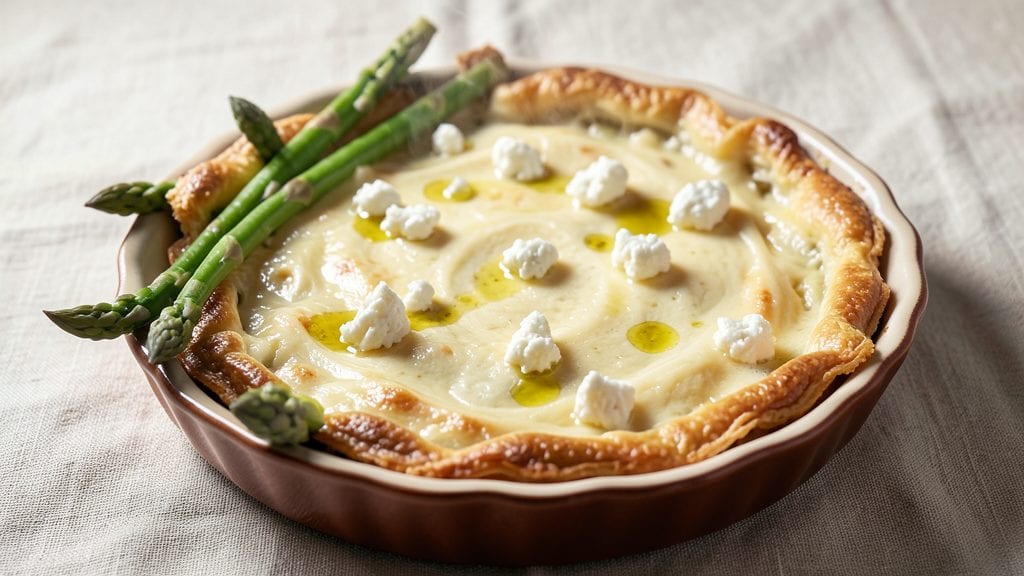
This asparagus and goat cheese quiche recipe delivers the perfect balance of tangy creaminess and herb-infused richness that elevates weekend brunches to restaurant-quality. The secret lies in pre-cooking the asparagus to maintain its vibrant texture while developing its natural sweetness—no soggy fillings here.
I developed this recipe after years of testing quiche techniques, and the difference between this version and store-bought is night and day.
The foundation begins with a flaky, herb-infused crust that pairs beautifully with the bright acidity of goat cheese and the freshness of asparagus. The egg mixture is precisely balanced for a golden, set finish that's neither rubbery nor runny, and the baking process ensures even cooking without overbrowning.
What makes this recipe stand out is how the flavors come together: the earthy goat cheese, the crisp asparagus, and the aromatic herbs create a harmonious bite that's both satisfying and elegant.
By the time it emerges from the oven, you'll have a quiche with a perfectly golden crust, tender asparagus spears peeking through the creamy filling, and a center that's just set—not dry. The tangy goat cheese adds depth, while the herbs infuse every bite with freshness.
This is the kind of quiche that makes you feel like you've spent a lazy morning in a French countryside kitchen, even if you're just standing at your own stovetop.
The beauty of this recipe is its versatility—serve it warm for brunch with a crisp green salad, or enjoy it at room temperature for a light lunch. The filling can be prepped ahead, making it ideal for meal prep or entertaining.
Let's get started on creating this foolproof, restaurant-worthy quiche that's sure to become a brunch staple.
Ingredients for asparagus and goats cheese quiche
Six fresh ingredients transform into a brunch masterpiece with golden crust and creamy tang.
| Ingredient | Amount | Notes |
|---|---|---|
| Fresh Asparagus Spears 🥦 | 1 ½ lb | Trimmed, tough ends removed |
| Goat Cheese 🧀 | 8 oz | Creamy, crumbled variety |
| Large Eggs 🥚 | 6 whole | Room temperature preferred |
| Heavy Cream 🥛 | 1 cup | Full-fat for richness |
| Milk 🥛 | ½ cup | Whole milk preferred |
| Unsalted Butter 🧈 | ½ cup | Cold, cubed for crust |
| All-Purpose Flour 🌾 | 2 cups | Plus 2 tbsp for rolling |
| Diamond Crystal Kosher Salt 🧂 | 1 tsp | Plus extra for crust |
| Freshly Ground Black Pepper 🌶️ | ½ tsp | Coarsely cracked |
| Fresh Chives 🌿 | ¼ cup | Finely chopped, for garnish |
| Fresh Thyme Leaves 🌿 | 1 tbsp | Finely chopped, for crust |
| Fresh Dill Weeds 🌿 | 1 tbsp | Finely chopped, for filling |
| Extra-Virgin Olive Oil 🫒 | 1 tbsp | For greasing the dish |
The asparagus is your star—Harvest Time or Mary's Gone Canning brands have the most vibrant spears. Trim the woody ends cleanly with a knife, leaving the tender tips intact. For the goat cheese, Whittard of Chelsea or Murray's Cheese deliver that perfect tangy creaminess. Fresh herbs matter here: Whole Foods or local farmers' markets carry the brightest thyme and dill. Pre-chop the chives and store them in the fridge—they wilt fast, but a quick soak in ice water revives them for garnish. The crust's secret? Cold butter and Diamond Crystal salt—it dissolves evenly without clumping.
No fresh dill? Dried dill at one-third the amount works, but you'll miss that bright pop. Substitute goat cheese with feta or ricotta, though the tang will differ. Heavy cream too rich? Half-and-half or whole milk keeps it creamy without overpowering. For the crust, King Arthur flour bakes up flakier than store brands. Short on time? Pre-made pie crust (like Pepperidge Farm) saves 20 minutes—just brush it with olive oil before baking. The eggs? Room temperature ensures even cooking, but cold eggs from the fridge will work if you add 5 minutes to the bake time.
Prep the asparagus ahead—it softens beautifully when blanched. Store the filling in an airtight container for up to 24 hours before baking. The crust can be rolled out and chilled overnight, wrapped tightly in plastic. Once baked, quiche reheats best at 300°F for 10 minutes—microwaving makes it rubbery. Leftovers keep 4 days in the fridge, though it's best enjoyed fresh. For meal prep, slice into wedges and freeze individual portions—the crust stays crisp even after thawing.
Why You'll Love This Recipe
- No-Fuss Assembly: I swear by this recipe because it’s the kind of dish where you can almost skip reading the instructions. Trim the asparagus, crumble the goat cheese—boom, done. The crust goes in, the filling gets poured, and 30 minutes later, you’ve got a meal that feels fancy without any stress.
- Tangy-Creamy Magic: That goat cheese? It’s the star—bright, slightly tangy, and melty in all the right ways. The heavy cream and eggs turn it into this silky, custardy center, while the asparagus adds a fresh, grassy pop. Honestly, the first bite makes me forget it’s supposed to be "healthy."
- Weeknight to Brunch: This quiche is my go-to when I need something reliable. Serve it warm for dinner with a crisp salad, or let it cool for brunch the next morning—it’s just as good (if not better) cold. My kids ask for it on weekends, and my partner sneaks seconds when he thinks I’m not looking.
- Leftovers That Don’t Suffer: Between us, most quiches turn rubbery when reheated. Not this one. The cream keeps it rich, and the asparagus stays tender, so it’s just as satisfying the third day. Plus, it’s cheap to make—eggs, milk, and seasonal asparagus stretch further than you’d think. My budget (and my lunchbox) thank me every time.
Step-by-step instructions for asparagus and goat cheese quiche
Here's how to create a golden, herb-infused crust filled with tangy goat cheese and tender asparagus.
Prepare the Herb-Infused Crust
In a food processor, combine the 2 cups all-purpose flour, 0.5 cup unsalted butter (cold and cubed), 1 tablespoon fresh thyme leaves, 1 teaspoon diamond crystal kosher salt, and 0.25 teaspoon freshly ground black pepper. Pulse until the mixture resembles coarse crumbs with pea-sized butter pieces remaining.
Transfer the dough to a bowl, add 2 tablespoons ice water, and mix just until it comes together. Divide the dough into two equal portions, flatten into discs, wrap in plastic, and chill for 30 minutes. This resting time prevents shrinking and ensures a flaky texture. Preheat your oven to 375°F while the dough chills.
Blind-Bake the Crust
Roll out one dough disc on a floured surface to fit a 9-inch pie dish, about ⅛-inch thick. Transfer the crust to the dish and trim excess dough, leaving a ½-inch overhang. Press the edges firmly against the dish to create a seal.
Line the crust with parchment paper, fill with pie weights or dried beans, and bake for 15 minutes. Remove the weights and bake for another 5 minutes until the edges begin to golden. This pre-baking prevents a soggy bottom when adding the filling later.
Prepare the Asparagus Filling
Trim the 1.5 lb fresh asparagus spears, discarding the tough ends. Blanch in boiling water for 2 minutes, then immediately transfer to an ice bath to stop cooking. Drain well and chop into ½-inch pieces. In a bowl, combine the asparagus with 1 tablespoon fresh dill weeds, 1 tablespoon extra-virgin olive oil, 0.25 teaspoon salt, and 0.125 teaspoon black pepper. Set aside.
In a separate bowl, whisk together the 6 whole large eggs, 1 cup heavy cream, 0.5 cup milk, and 0.25 cup finely chopped fresh chives. Fold in the 8 oz crumbled goat cheese until just combined. The mixture should be smooth but still show slight streaks of cheese.
Assemble and Bake the Quiche
Pour the egg mixture evenly over the pre-baked crust, then gently fold in the asparagus mixture, spreading it evenly. The filling should reach just below the crust's rim to prevent overflowing. Transfer the quiche to the oven and bake for 35-40 minutes until the center is set and the top is golden brown.
To test doneness, insert a knife near the center—it should come out clean. Let the quiche rest for 10 minutes before slicing. This resting time allows the filling to set properly and prevents crumbling. Serve warm with a simple arugula salad for a complete meal.
Pro Tips For Making Asparagus And Goats Cheese Quiche
- Blanch Asparagus First: Trim the tough ends, then plunge spears in boiling water for 30 seconds before chilling in ice water. This stops them from turning mushy in the oven—no one wants a quiche with sad, limp asparagus. (Yes, even if you’re impatient like me.)
- Crust Before Cream: Blind-bake your crust for 8-10 minutes at 375°F (200°C) before adding the filling. I learned this the hard way—skipping it makes the bottom soggy, and no one’s eating a wet quiche. Sprinkle parchment paper with pie weights or dried beans if you’re nervous.
- Salt the Goat Cheese: Goat cheese is tangy but often unsalted—adjust it like you would butter. A pinch of flaky salt (or a few grinds of black pepper) before mixing it into the custard makes the flavor sing. Trust me, the difference is noticeable.
- Preheat the Pan: Pop the quiche dish in the oven alongside the crust for 5 minutes before pouring in the custard. The extra heat helps the eggs set faster and prevents a gummy center. (Your future self will thank you when the quiche comes out golden and firm, not jiggly.)
Pro cooking tips for great asparagus and goats cheese quiche
Crust Perfection
The secret to a flaky, herb-infused crust starts with cold butter—never softened. Cut it into ½-inch cubes and pulse in the food processor with flour until it resembles pea-sized crumbs.
This ensures maximum surface area for flakiness. I recommend using King Arthur flour for its high protein content, which creates a lighter texture. 🌿
After mixing, chill the dough for at least 30 minutes—this prevents shrinking and makes rolling easier. When blind-baking, use pie weights or dried beans to prevent puffing. If you don’t have weights, crumpled aluminum foil works in a pinch.
Brush the baked crust with a light coat of olive oil before adding filling to create a golden barrier.
Asparagus Prep
Never skip blanching the asparagus—this step preserves its vibrant green color and tender texture. Use exactly 2 minutes in boiling water, then shock in ice water immediately. Overcooking turns asparagus mushy, while undercooking leaves it crunchy. Chop into ½-inch pieces for even cooking and better distribution in the quiche.
Season the asparagus with fresh dill and olive oil while it’s still warm—this helps the flavors meld. I like to toss it in a bowl and let it sit for 5 minutes before folding into the egg mixture.
This gives the dill time to infuse the asparagus with its bright, citrusy notes.
Egg Mixture Balance
The ratio of 6 eggs to 1 cup heavy cream is crucial for a creamy yet set filling. Whisk the eggs and cream together gently—overmixing incorporates too much air, which can cause the quiche to puff and overflow.
Fold in the goat cheese just until combined to maintain its creamy texture. If the mixture looks too thick, add 1-2 tablespoons of milk to loosen it slightly.
For extra richness, I sometimes add 1 tablespoon of crème fraîche to the egg mixture. It adds a subtle tang that complements the goat cheese beautifully. Avoid substituting with sour cream—it’s too acidic and can curdle when baked.
Baking Like a Pro
Pre-bake the crust until it’s light golden—this prevents a soggy bottom. The filling should reach just below the crust’s rim to avoid overflowing. Bake at 375°F for 35-40 minutes, but check at 30 minutes—every oven varies.
The center should be just set when a knife inserted comes out clean, but still slightly wobbly.
Resist the urge to open the oven door early—this causes temperature fluctuations that can lead to uneven cooking. If the top browns too quickly, tent the quiche with aluminum foil for the last 10 minutes of baking.
Let it rest for 10 minutes before slicing—this allows the filling to firm up and makes serving easier.
Troubleshooting Tips
If your quiche comes out too runny, it likely didn’t bake long enough. Increase the bake time by 5-10 minutes and check the internal temperature—it should reach 160°F. For a bubbly top, whisk the egg mixture more vigorously before baking, but avoid overmixing.
A soggy crust usually means the filling was too wet or the crust wasn’t pre-baked enough. Next time, blind-bake the crust for 20 minutes instead of 15, and reduce the milk in the filling by 2 tablespoons.
If the quiche cracks on top, it’s a sign of uneven baking—rotate the pan halfway through for even heat distribution.
Nutrition facts
Frequently asked questions
Can I make this quiche without a crust?
For a crustless version, simply whisk the egg mixture with goat cheese and asparagus, then bake in a greased 9-inch oven-safe skillet at 350°F for 30-35 minutes. Stir once halfway through for even cooking. The texture will be more like a frittata, but still delicious with that tangy goat cheese flavor.
How do I prevent the goat cheese from sinking to the bottom?
Fold the goat cheese into the egg mixture just until combined—overmixing causes it to break apart and sink. For extra insurance, sprinkle half the cheese on top of the crust before adding the egg mixture, then gently fold in the rest. This creates layers of flavor while keeping the texture creamy throughout.
Can I use frozen asparagus instead of fresh?
You can, but fresh asparagus gives the best texture and flavor. If using frozen, thaw it first, then pat completely dry. Skip the blanching step—just chop into ½-inch pieces and season with dill and olive oil. Frozen asparagus works in a pinch, but fresh will give that signature vibrant snap.
How long can I prep the filling ahead of time?
The filling stays fresh in an airtight container in the fridge for up to 24 hours before baking. For best results, assemble the quiche in the morning and bake it for brunch. If prepping the night before, cover the crust with plastic wrap to prevent drying out. The crust can also be rolled out and chilled overnight.
What's the best way to reheat leftovers?
Slice the quiche into wedges and reheat at 300°F for 10-12 minutes until warmed through. Avoid the microwave—it makes the crust soggy. For a crispy top, broil for 1-2 minutes on high heat at the end. Leftovers keep well for 4 days in the fridge or can be frozen for up to 2 months.