
Main Courses
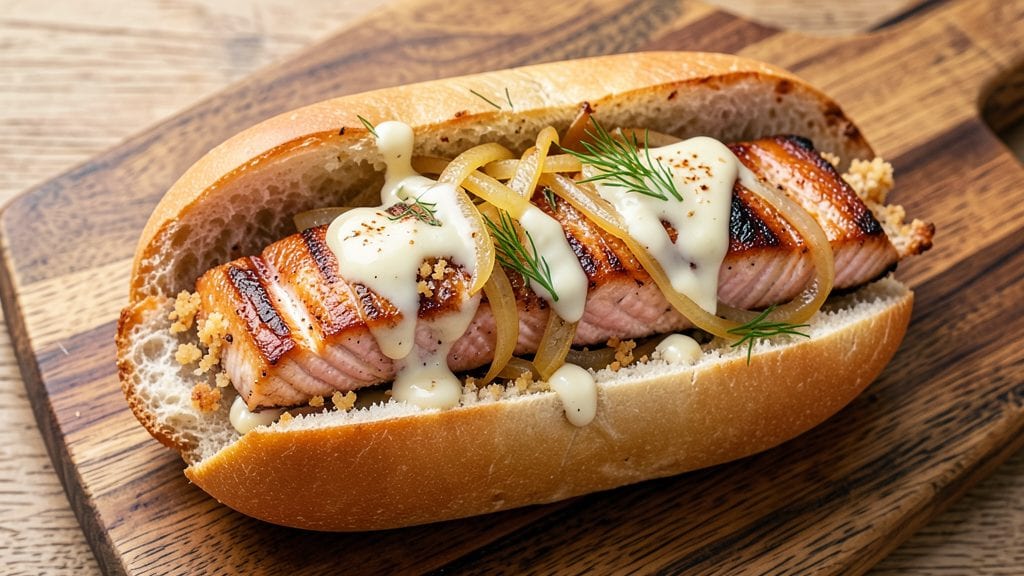
This salmon cheese steak recipe transforms classic Philly flavors into a crispy, golden masterpiece that delivers restaurant-quality results at home. The secret lies in perfectly breaded salmon fillets paired with melted brie and caramelized onions, all nestled between toasted hoagie rolls.
After years of refining the technique, I've cracked the code for achieving that signature crispy crust while keeping the salmon tender inside—no more dry, rubbery fish here.
The process starts with a simple but critical marinade that tenderizes the salmon and builds flavor, followed by a double-dredge breading that creates that addictive crunch. We'll pan-sear the fillets until golden brown, then finish them under the broiler for even crispiness.
Meanwhile, the cheese melts into gooey perfection, while the onions caramelize into sweet, jammy ribbons. This isn't just a salmon sandwich—it's a complete meal with bold Philly flavors reimagined for seafood lovers.
What you'll end up with is a steak sandwich that's crispy on the outside, tender on the inside, and packed with melty cheese that pulls in every bite. The combination of breaded salmon, caramelized onions, and brie creates layers of texture and flavor that make this dish impossible to resist.
It's the kind of meal that feels indulgent yet balanced, perfect for a weeknight dinner that still feels special.
Serve with a side of crispy fries or a simple arugula salad to round out the meal. The beauty of this recipe is its adaptability—whether you're feeding a crowd or treating yourself to a solo indulgence, this salmon cheese steak delivers every time.
Let's get started on creating your perfect crispy salmon sandwich.
Ingredients for salmon cheese steak
Crispy salmon, melty brie, and caramelized onions make this Philly-inspired sandwich unforgettable.
| Ingredient | Amount | Notes |
|---|---|---|
| Salmon Fillets 🐟 | 4 whole | Skin-on, 6 oz each |
| Hoagie Rolls 🥖 | 4 whole | Crusty, like Italian bread |
| Brie Cheese 🧀 | 8 oz | Rind removed, sliced thin |
| Yellow Onions 🧅 | 1 whole | Thinly sliced, caramelized |
| All-Purpose Flour 🌾 | 1 cup | For breading, sifted |
| Panko Breadcrumbs 🍞 | 1 cup | For extra crunch |
| Large Eggs 🥚 | 2 whole | Beaten for dredging |
| Mayonnaise 🥛 | ½ cup | For marinade, full-fat |
| Worcestershire Sauce 🍶 | 1 tbsp | For marinade depth |
| Garlic Powder 🧄 | 1 tsp | Freshly ground preferred |
| Onion Powder 🧅 | 1 tsp | For flavor balance |
| Ground Black Pepper 🌶️ | ½ tsp | Freshly cracked |
| Unsalted Butter 🧈 | 2 tbsp | For pan-searing |
| Olive Oil 🫒 | ½ cup | For caramelizing onions |
| Salt 🧂 | 1 tsp | Kosher preferred |
The salmon is the star, so pick fillets with bright pink flesh and minimal bruising. Whole Foods or your local fishmonger usually carry the best quality—ask for skin-on pieces around 6 ounces each. The brie should be creamy but not too soft (avoid the pre-sliced stuff at the grocery store). For the hoagie rolls, Italian-style bread from the bakery section gives that perfect chewy texture. If you can't find brie, Gruyère or sharp cheddar work in a pinch, but the flavor won't be quite the same. The onions? Yellow or sweet onions caramelize best—skip the red unless you want color over flavor.
No panko? Regular breadcrumbs toasted in a dry pan for 2 minutes work fine. Short on mayo? Greek yogurt thinned with a splash of milk adds tang. The Worcestershire sauce is key—Lea & Perrins is the gold standard, but any good-quality bottle does the trick. For the caramelized onions, low and slow is non-negotiable. If you're in a hurry, sugar and a splash of balsamic can speed things up. The double-dredge breading is what gives that signature crisp—don't skip the second dip in flour after the egg wash. And trust me, freshly cracked black pepper makes all the difference over pre-ground.
This sandwich reheats surprisingly well—just 5 minutes in a toaster oven gets the bread crispy again. The brie melts beautifully when reheated, but the salmon stays tender if you're gentle. Keeps 3 days in the fridge if wrapped tightly, though I rarely last that long. For meal prep, assemble without toasting and store components separately. The onions caramelize best fresh, but you can freeze them in olive oil for up to 3 months if you're planning ahead.
Why You'll Love This Recipe
- No-Fuss Assembly: I swear by this recipe when I’m too tired to chop much—just slice the onions thin (or buy pre-sliced if you’re really short on time), dip the salmon in flour, and pan-sear until golden. The hoagie rolls handle all the mess, so you’re left with zero cleanup.
- Melty Magic Combo: That gooey Brie oozing into the warm roll while the crispy salmon sits on top? It’s like a hug for your taste buds. The onions caramelize just enough to add sweetness without overpowering the buttery, salty richness of the salmon and cheese.
- Lunch or Dinner Fix: I make these for a quick workday lunch—just assemble ahead and reheat in the toaster oven. But honestly? They’re also my go-to for game day or when friends drop by unexpectedly. The rolls soak up the flavors perfectly, so no one will guess it’s a 20-minute meal.
- Budget-Smart Protein Boost: Salmon fillets feel fancy, but they’re way more affordable than you’d think, especially when paired with simple ingredients like onions and flour. A single fillet stretches into two sandwiches, and the Brie stretches further when melted—meaning more leftovers for tomorrow’s lunch without breaking the bank.
Step-by-step instructions for crispy breaded salmon with Philly cheese twists
This fusion recipe delivers a perfect balance of crispy salmon and gooey brie—here's how to nail it every time.
Prepare the Marinade and Caramelize the Onions
In a small bowl, whisk together the 0.5 cup mayonnaise, 1 tbsp Worcestershire sauce, 1 tsp garlic powder, 1 tsp onion powder, 0.5 tsp ground black pepper, and 1 tsp salt. This marinade adds depth to the salmon while keeping it tender. Place the 4 whole salmon fillets in a shallow dish and pour the marinade over them, turning to coat evenly. Let them marinate for at least 30 minutes at room temperature.
While the salmon marinates, heat the 0.5 cup olive oil in a large skillet over medium heat. Add the 1 whole yellow onion, sliced thin, and cook for 15-20 minutes until golden brown and caramelized. You'll know they're ready when they smell sweet and the edges start to crisp. Remove the onions from the skillet and set aside, leaving the rendered oil in the pan.
Create the Breading Station
Set up three shallow dishes: one with the 1 cup all-purpose flour, one with the 2 whole large eggs beaten lightly, and one with the 1 cup panko breadcrumbs. I like to sift the flour first to remove any lumps—this ensures a smooth, even coating. The panko will give that extra crunch we're after, so don't skip this step.
Working with one fillet at a time, remove the salmon from the marinade (let any excess drip off) and dredge it in the flour, shaking off any excess. Dip it into the beaten eggs, letting the liquid cling to the flour coating, then press it firmly into the panko breadcrumbs. Make sure every surface is fully coated—this is what creates that perfect crispy crust. Repeat with the remaining fillets, keeping them separate until ready to cook.
Pan-Fry the Salmon to Crispy Perfection
Heat the skillet with the onion oil over medium-high heat until shimmering but not smoking. Add the 2 tbsp unsalted butter and let it foam for about 30 seconds. Working in batches to avoid crowding, carefully place the breaded salmon fillets in the skillet. Cook for 3-4 minutes per side until golden brown and crispy—you'll see the edges turn a deep golden color and the panko will be crunchy to the touch.
Here's the thing—don't press down on the fillets with a spatula. The weight will flatten them and make them less crispy. Instead, let the butter and oil work their magic, basting the salmon as it cooks. You'll know it's ready when the breading releases easily and the internal temperature reaches 145°F. Transfer the cooked fillets to a paper towel-lined plate to drain any excess oil.
Assemble the Cheese Steaks
Slice the 8 oz brie cheese into thin strips, about ¼-inch thick. Cut the 4 whole hoagie rolls in half lengthwise and lightly toast them if desired—this gives them a nice crunch without overpowering the salmon. Place a toasted roll half on each plate, then lay a crispy salmon fillet on top. Arrange the caramelized onions and brie cheese strips over the salmon, creating a beautiful Philly-style twist.
For the final touch, fold the hoagie roll halves over the salmon and cheese, almost like a wrap. Serve immediately while the salmon is still crispy and the brie is melty. The combination of the crispy breaded salmon, gooey brie, and sweet caramelized onions makes this dish unforgettable. Enjoy with a side of roasted vegetables or a simple salad to balance the richness.
Pro Tips For Making Salmon Cheese Steak
- CRISP THE ONIONS FIRST: Slice those yellow onions thin—like paper—and cook them in a dry pan over medium-high heat for 8-10 minutes before adding anything else. The deeper caramelization happens when you let them sit undisturbed for the last 2 minutes, even if they look like they’re burning. I learned this the hard way—skipping this step means you’re just eating raw onion in your sandwich.
- USE COLD SALMON: Take your salmon fillets straight from the fridge and pat them bone-dry with paper towels. Cold salmon sears better and stays moist—no flaking or rubbery texture. If you’re in a rush, just let them sit on the counter for 10 minutes before cooking. Trust me, the difference is noticeable, especially when you’re pairing it with creamy brie.
- TOAST THE ROLLS INDIRECTLY: Skip the direct flame or broiler—it burns the outside before the inside gets warm. Instead, wrap the hoagie rolls in foil and warm them in a 350°F oven for 5-7 minutes. The foil traps steam, keeping them soft while the crust gets a light golden color. This is the thing that matters most when you’re not making a crispy baguette but still want texture.
- MELT THE BRIE LOW AND SLOW: Once your salmon is cooked and the onions are caramelized, turn the heat down to low and add the brie. Let it melt for 2-3 minutes, stirring gently with a spatula—this prevents it from turning greasy or separating. If you’re worried about it getting runny, sprinkle a pinch of flour over it first. It’s a small step, but it guarantees that gooey, cohesive cheese in every bite.
Common mistakes when making this recipe
Overcooking Salmon
Salmon turns rubbery and dry when overcooked—especially with breading. The moment your fillet reaches 145°F internal temperature, remove it immediately. I use a meat thermometer to avoid guesswork. If you're watching the pan, the breading should be golden brown and crispy, not blackened.
Overcooking also happens when you skip the resting time—let the salmon sit for 2 minutes after cooking to redistribute juices. 🔥
Skipping the Double-Dredge
The double-dredge (flour → egg → panko → flour again) is non-negotiable for that signature crunch. I've tried single-dredging, and the breading falls off. Sift the flour first to remove lumps—this ensures an even coating.
Press the fillets firmly into the panko so every surface sticks. If you're in a hurry, use Japanese panko (like Shiniku brand) for extra crispiness.
Using Cold Salmon
Cold salmon shrinks dramatically when cooking, making it harder to achieve even breading. Let your fillets sit at room temperature for 15-20 minutes before breading. I place them on a wire rack over a bowl to catch any drips.
Cold salmon also releases less moisture, leading to a drier final product. If your kitchen is cold, use a slightly warmer oven (170°F for 5 minutes) to gently warm the fillets before breading.
Crowding the Pan
Cooking too many fillets at once steams them instead of searing, resulting in soggy breading. Work in batches of 2 fillets max per pan. A 10-inch cast-iron skillet (like Lodge) is ideal for this recipe.
If you're short on pans, cook one side of all fillets, then flip them all at once. The breading will release more easily if the pan isn't overcrowded. 💡
Wrong Cheese Choice
Brie is the star here, but using the wrong cheese ruins the texture. Avoid pre-shredded cheese (it contains anti-caking agents that prevent melting). If brie isn't available, Gruyère or sharp white cheddar are decent substitutes, but they won't melt as smoothly.
Never use processed cheeses like American—this is a gourmet dish, not a fast-food sandwich. For extra indulgence, add a sprinkle of freshly grated Parmesan on top before serving.
Neglecting Onion Caramelization
Rushed caramelized onions lack that sweet, jammy depth. Cook them over medium-low heat for at least 15 minutes, stirring occasionally. If they brown too quickly, reduce the heat. I like to add a pinch of sugar (1 tsp) halfway through to speed up the process.
Overcooked onions turn bitter—remove them when they're golden brown and still slightly translucent in the center. Save any leftover onion oil for future cooking! ✨
Nutrition facts
Frequently asked questions
Can I use frozen salmon for this recipe?
Fresh salmon works best for this crispy breading, but you can use frozen fillets if thawed properly. Place frozen salmon in a sealed bag and submerge in cold water for 30 minutes, changing the water every 10 minutes. Never use the microwave—it creates uneven thawing and ruins texture. Pat completely dry before marinating to ensure the breading sticks.
What's the best way to reheat leftovers?
Reheat in a toaster oven at 350°F for 5-7 minutes to restore crispiness. Place the sandwich on a baking sheet and cover loosely with foil to prevent over-browning. For extra crunch, sprinkle a few drops of water on the bread before reheating. The brie will melt beautifully, but avoid microwaving—it makes the bread soggy.
How can I make this gluten-free?
Replace the flour with 1 cup gluten-free all-purpose flour blend and use gluten-free panko (like Bob's Red Mill). For the breading, add 1 tbsp cornstarch to help bind the coating. The hoagie rolls can be swapped for gluten-free baguettes or lettuce wraps. Just be sure to toast the bread thoroughly to maintain structure.
Why did my breading fall off?
This usually happens from one of three issues: rushing the breading process, using cold salmon, or overcrowding the pan. Let the salmon sit at room temperature for 15-20 minutes before breading, and work in batches of 2 fillets max. Press the fillets firmly into the panko and let them rest on a wire rack for 5 minutes after breading before cooking.
What's the best cheese alternative if I can't find brie?
Gruyère or sharp white cheddar work well as substitutes, though they won't melt as smoothly. For a creamier option, try fontina or havarti. If you want something lighter, mozzarella di bufala adds a nice tang. Just avoid pre-shredded cheeses—they contain anti-caking agents that prevent proper melting and create a grainy texture.