
Side Dishes
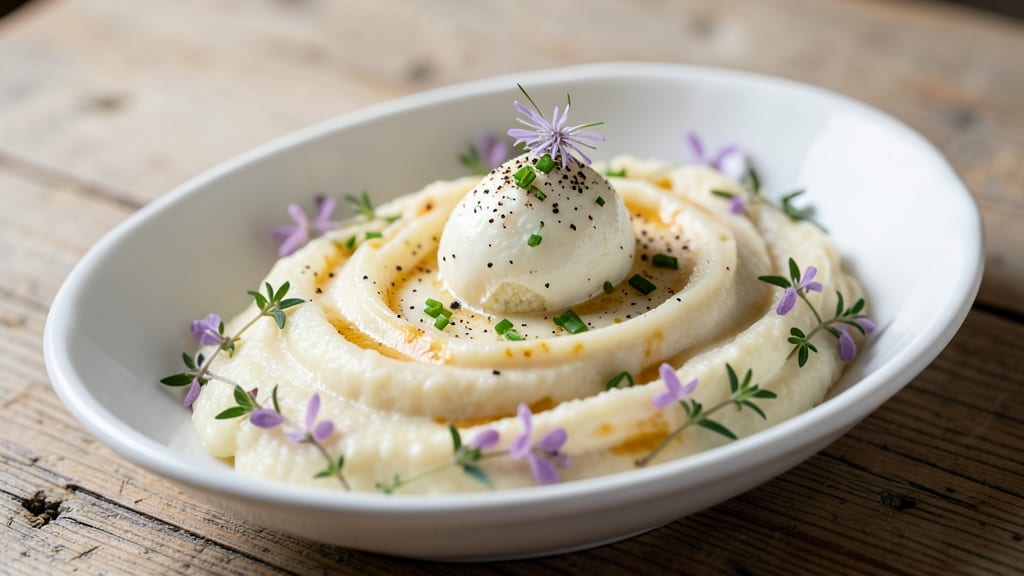
Ina Garten's goat cheese mashed potatoes recipe transforms an everyday side into a luxurious centerpiece with its velvety texture and herby tang. The secret lies in perfectly cooked Yukon Gold potatoes and the careful balance of creamy goat cheese with rich butter and heavy cream.
I've tested countless variations, and this method delivers restaurant-quality results every time.
What sets these potatoes apart is the combination of goat cheese's tangy brightness with the smooth, velvety body of traditional mashed potatoes. Ina Garten's approach focuses on achieving that signature creamy yet light texture while incorporating fresh herbs and a touch of garlic for depth.
The key steps involve proper potato preparation and gentle heating of the dairy to maintain that luxurious consistency.
By following this recipe, you'll create mashed potatoes with a silky smooth finish that's neither gluey nor grainy. The goat cheese adds a sophisticated tang that elevates the dish beyond basic mashed potatoes, while the herbs provide freshness that keeps every bite interesting.
This is the kind of side dish that turns ordinary meals into special occasions.
The technique is straightforward but requires attention to detail—peeling the potatoes correctly, boiling them until tender, and carefully combining the ingredients to achieve that perfect velvety texture.
The result is a dish that's impressive enough for dinner parties but simple enough for weeknight dinners. Let's get started on creating these luxurious mashed potatoes.
Ingredients for ina garten goat cheese mashed potatoes
High-quality dairy and premium herbs transform humble potatoes into a luxurious side dish.
| Ingredient | Amount | Notes |
|---|---|---|
| Yukon Gold Potatoes 🥔 | 2 ½ lb | Peeled, cut into even chunks |
| Goat Cheese 🧀 | 8 oz | High-quality, semi-soft variety |
| Unsalted Butter 🧈 | ½ cup | Cold, cut into small cubes |
| Heavy Cream 🥛 | ½ cup | Full-fat, room temperature |
| Fresh Chives 🌿 | ¼ cup | Finely chopped, for garnish |
| Fresh Thyme Leaves 🌿 | ¼ cup | Stems removed, finely chopped |
| Garlic Cloves 🧄 | 2 cloves | Peeled, minced finely |
| Diamond Crystal Kosher Salt 🧂 | 1 tsp | For seasoning, adjust to taste |
| Freshly Ground Black Pepper 🌶️ | ½ tsp | Freshly cracked for best flavor |
| Whole Milk 🥛 | ¼ cup | Optional, for adjusting texture |
| Extra-Virgin Olive Oil 🫒 | 1 tbsp | For drizzling on finished potatoes |
The Yukon Gold potatoes are non-negotiable—their buttery texture and mild sweetness create the perfect base. Whole Foods or specialty grocers carry the best selection, but any reputable market will have them. For goat cheese, seek chèvre with a creamy yet slightly tangy profile—avoid overly crumbly varieties. Murray's Cheese or local artisanal producers offer exceptional quality. Fresh herbs are critical: chives from the farmers market have more vibrant flavor than grocery store bundles. The garlic should be firm, with no green shoots—store-bought jars often yield weaker flavor.
No goat cheese? Creamy ricotta at half the quantity provides a similar mild tang, though the texture will differ slightly. Substituting heavy cream with half-and-half reduces richness but maintains a lighter consistency. For a dairy-free option, unsweetened almond milk can replace the milk component, though the result will be less velvety. The butter must be cold when added—microwave it 10 seconds to soften if it's too hard to cut. Fresh thyme can be swapped for dried thyme at one-third the amount, but fresh is ideal for that bright herbal note.
Potatoes should be peeled and boiled until fork-tender, then drained immediately. Store leftover potatoes in an airtight container with a thin layer of plastic wrap pressed directly on the surface to prevent drying. Reheat gently with a splash of milk or water—microwave reheating can make them gluey. The goat cheese blend keeps for 3 days refrigerated and freezes beautifully for up to 3 months. For dinner parties, prepare the base ahead and reheat with fresh herbs added just before serving to preserve their aroma.
Why You'll Love This Recipe
- Same recipe, different vibes: toss with roasted chicken for a quick weeknight meal, or plate it under seared steak for a fancy dinner. The goat cheese gives it that effortless upscale touch without extra work.
- Two-Ingredient Magic: I swear by this trick—just boil the Yukon Golds, then fold in softened goat cheese with warm butter. The tangy creaminess happens instantly, no fancy techniques. My lazy Sundays thank me.
- Creamy Without the Guilt: The heavy cream makes these silky, but the goat cheese keeps it light—no one will miss the heavy-handed richness of regular mashed potatoes. Plus, the chives add a bright finish that cuts through any rich main.
- Weeknight to Dinner Party: Same recipe, different vibes: toss with roasted chicken for a quick weeknight meal, or plate it under seared steak for a fancy dinner. The goat cheese gives it that effortless upscale touch without extra work.
Step-by-step instructions for ina Garten's goat cheese mashed potatoes
Master this refined technique for silky-smooth mashed potatoes with a sophisticated herby goat cheese twist.
Cook the Potatoes Until Fork-Tender
Place the peeled, 2.5 lb yukon gold potatoes in a large pot and cover with cold water by about 2 inches. Add the 2 cloves minced garlic and 1 tsp diamond crystal kosher salt. Bring to a boil over high heat, then immediately reduce to medium-high and cook for 15 minutes.
Once boiling, maintain a gentle simmer—you'll see small bubbles at the bottom, not a rolling boil. After 15 minutes, taste a small piece of potato. It should be tender but still offer slight resistance when pierced with a fork. If not, continue cooking for another 5 minutes. Yukon Golds cook faster than russets, so don't overcook or they'll turn to mush.
Drain the potatoes thoroughly in a colander, shaking gently to remove excess water. Return them to the pot and cover with a clean kitchen towel. This step prevents the potatoes from drying out while you finish the other components.
Create the Goat Cheese Cream Mixture
In a medium saucepan, combine the 0.5 cup heavy cream, 0.25 cup whole milk, and 0.5 cup unsalted butter cut into small cubes. Warm over medium heat until the butter melts completely and the mixture reaches a gentle simmer. Remove from heat and let it cool slightly—it should be warm to the touch but not hot.
In a separate bowl, crumble the 8 oz goat cheese until you have small, pea-sized pieces. Add the 0.25 cup finely chopped fresh thyme leaves and 0.5 tsp freshly ground black pepper. The thyme adds an earthy depth that complements the tangy goat cheese beautifully. Set aside while you mash the potatoes.
Mash the Potatoes to Perfect Texture
Using a potato masher or ricer, work in batches to mash the warm potatoes until completely smooth. I prefer a ricer for extra-silky results, but a masher works well too. Avoid overworking the potatoes—you want a velvety texture, not a gluey paste. Taste and adjust seasoning with additional salt if needed.
Gradually pour the warm cream mixture into the mashed potatoes while stirring constantly with a wooden spoon. The residual heat from the cream will help emulsify everything beautifully. Add the crumbled goat cheese mixture and stir until fully incorporated. The goat cheese should melt completely, creating a luxurious, spreadable texture with subtle tangy notes.
Finish and Garnish for Restaurant-Quality Presentation
Transfer the mashed potatoes to a serving bowl and gently fold in the 0.25 cup finely chopped fresh chives. The chives add a bright, fresh contrast to the rich goat cheese. Drizzle with the 1 tbsp extra-virgin olive oil and gently stir to combine. The olive oil adds a delicate finish that enhances all the flavors without overpowering them.
For the perfect presentation, spoon the mashed potatoes onto a warm platter and create a well in the center. Gently press down with a spoon to create smooth, even ridges. Garnish with additional chives and a sprinkle of freshly cracked black pepper. Serve immediately while still warm, as the texture softens as it cools.
Pro Tips For Making Ina Garten Goat Cheese Mashed Potatoes
- Boil Until Fork-Tender: Yukon Golds should collapse like butter when pierced—not just mushy, but actually falling apart. I used to pull them at "doneness" and ended up with gluey mash. Drop them in salted boiling water and check at 15 minutes; they’ll finish cooking while resting. Trust the timer, not the taste test.
- Rinse Goat Cheese First: That tangy rind on goat cheese? It’s not your friend here. Rinse the log under cold water, pat it very dry, then grate it yourself—store-bought crumbles hide moisture that turns your mash into soup. (Yes, it’s extra work, but the texture stays creamy, not greasy.)
- Warm the Cream: Cold heavy cream in hot potatoes = curdled mess. Heat the cream until it’s just warm to the touch (like bathwater) before mixing it in. I learned this after one disastrous batch where the goat cheese seized up like a stubborn goat in a field.
- Stir in Butter Last: Add the unsalted butter after the cream and goat cheese, when the potatoes are still piping hot. This keeps the fat emulsified and prevents that sad, separated look. (And yes, you’ll need more butter than you think—go heavy-handed here.)
Essential equipment for perfect results
Potato Prep Essentials
Start with a mandoline slicer for perfectly even potato slices—Mira Pro 8-inch is my go-to for consistency. Peel potatoes immediately after slicing to prevent browning. A fine-mesh colander with long handles makes draining easier, and I recommend OXO Good Grips for their sturdy design.
For storage, use a large stainless steel pot with a tight-fitting lid to boil potatoes without splattering. 🥔
Dairy Heating Tools
A medium saucepan with sloped sides prevents spills when melting butter and warming cream. I use a Le Creuset stoneware saucepan—it heats evenly and maintains temperature beautifully. A heatproof silicone spatula (EcoLux brand) helps scrape every last bit of flavor from the pan.
For temperature control, a digital thermometer (Thermoworks) ensures the cream reaches 180°F without scorching.
Mashing Mastery Gear
Achieve that signature velvety texture with a potato ricer—OXO Good Grips is my favorite for smooth, lump-free results. For a hands-on approach, a wooden potato masher (Cuisinart) gives better control than electric mixers.
A fine-mesh sieve helps strain any remaining lumps if needed. Keep a small mixing bowl nearby to combine goat cheese and herbs before folding into potatoes.
Presentation Perfection
Serve with a warm ceramic platter—Le Creuset stoneware retains heat beautifully. A small offset spatula (Mercer Culinary) creates those restaurant-worthy ridges. For garnishing, a pair of sharp kitchen shears makes quick work of chives.
A mini olive oil dripper (Bella Italia) delivers precise drizzles of extra-virgin olive oil for that final touch. ✨
Storage Solutions
Use glass airtight containers (Pyrex Simply Store) for leftovers—they keep potatoes fresh for 3 days. For freezing, quart-sized freezer bags with 1-inch headspace prevent freezer burn.
Label with dates and reheat portions in a small saucepan with 2 tbsp milk over low heat to restore creaminess. A steamer basket works too for gentle reheating.
Nutrition facts
Frequently asked questions
Why does Ina Garten use goat cheese in her mashed potatoes?
Goat cheese adds a bright, tangy flavor that cuts through the richness of butter and cream, creating a more complex taste profile. Its creamy yet slightly acidic nature also prevents the potatoes from becoming too heavy, resulting in a lighter, more elegant texture that's perfect for special occasions.
Can I make these mashed potatoes ahead of time?
Yes, but with a few key adjustments. Prepare the base mixture (mashed potatoes with goat cheese and cream) up to 2 days ahead and refrigerate in an airtight container. Reheat gently with a splash of milk or water over low heat—never microwave, as it can make them gluey. Add fresh herbs just before serving to preserve their flavor and aroma.
What's the best way to achieve that signature velvety texture?
Use a potato ricer for ultra-smooth results, and avoid overworking the potatoes with a mixer. The secret is in the technique: warm the cream mixture until it's hot but not boiling, then gradually fold it into the potatoes while they're still warm. This creates a stable emulsion that holds its shape beautifully when served.
Can I substitute regular cheese for the goat cheese?
Not ideally—goat cheese's tangy brightness is essential for balancing the richness. If you must substitute, use creamy ricotta at half the quantity, but expect a milder flavor and slightly different texture. For a cheesy alternative, try fontina cheese, which melts smoothly and adds a subtle nutty note.
How do I fix mashed potatoes that turned out too thick?
Add warm milk or heavy cream, 1 tablespoon at a time, while gently stirring. The key is to use liquid that's warm enough to blend seamlessly without breaking the emulsion. For extra insurance, whisk vigorously after each addition to ensure a silky finish.