
Main Courses
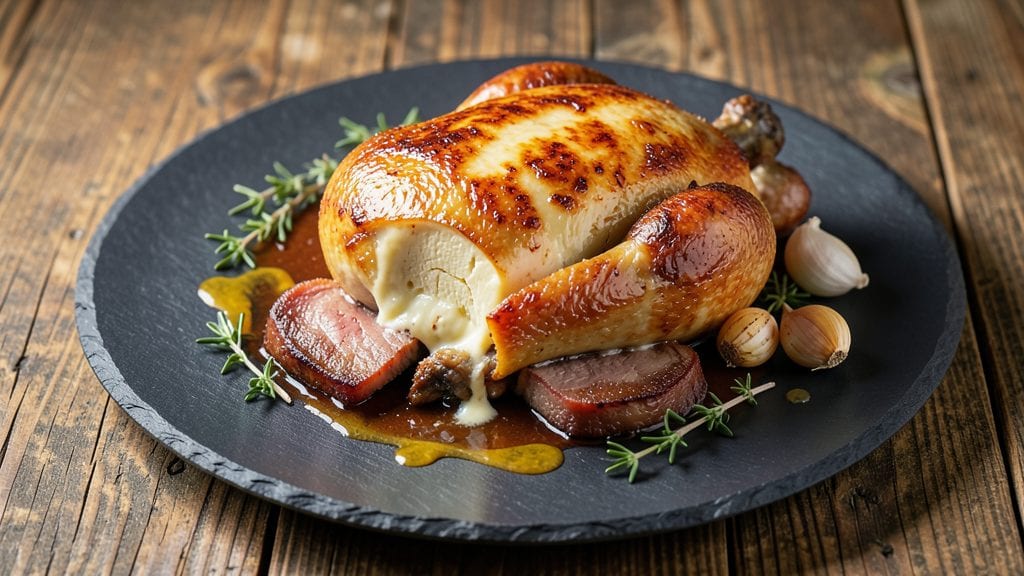
This duck cheese recipe transforms rich duck meat into a decadent, crisp-skinned dish with a creamy cheese center that melts at the first bite. The balance of savory duck and sharp Gruyère creates a harmonious flavor that feels both luxurious and approachable.
I developed this technique after years of experimenting with duck preparations, and it never fails to impress—whether served at a dinner party or as a special weeknight meal.
The secret lies in the crispy skin, achieved through precise roasting, and the rich filling, where duck and cheese blend seamlessly. You'll start with a whole duck, seasoned simply with salt and pepper, then roast it until the skin is golden and shatteringly crisp.
While the duck rests, you'll prepare the cheese mixture—Gruyère, duck fat, and herbs—then stuff it back into the cavity for a final bake that creates a gooey, flavorful center.
What you end up with is a dish that looks stunning on any plate: crispy, golden skin encasing tender duck meat infused with melty cheese. The aroma alone will have guests anticipating every bite, and the contrast of textures—crispy, creamy, and juicy—makes it unforgettable.
This recipe delivers restaurant-quality results without the fuss, proving that even complex dishes can be within reach.
Perfect for holiday gatherings or intimate dinners, this duck cheese recipe scales beautifully and pairs well with roasted vegetables or a crisp white wine. The method is straightforward once you understand the key steps, and the payoff is a dish that feels like a true culinary achievement.
Let's get started—your taste buds will thank you.
Ingredients for duck cheese
Rich duck, sharp Gruyère, and crispy skin—this is where luxury meets simplicity.
| Ingredient | Amount | Notes |
|---|---|---|
| Whole Duck 🦆 | 5 lb | Fresh, skin-on, giblets removed |
| Gruyère Cheese 🧀 | 8 oz | Aged 12+ months, freshly grated |
| Duck Fat 🫒 | ½ cup | Rendered from duck skin |
| Fresh Thyme 🌿 | ¼ cup | Leaves only, stems discarded |
| Fresh Rosemary 🌿 | ⅛ cup | Finely chopped, fresh preferred |
| Garlic Cloves 🧄 | 4 cloves | Peeled, minced fine |
| Diamond Crystal Kosher Salt 🧂 | 1 ½ tbsp | Coarse grain preferred |
| Freshly Ground Black Pepper 🌶️ | 1 tsp | Freshly cracked |
| Unsalted Butter 🧈 | ¼ cup | Cold, cubed |
| Extra-Virgin Olive Oil 🫒 | 2 tbsp | For basting |
| Fresh Sage Leaves 🌿 | ⅛ cup | Chopped, for stuffing |
| Fresh Parsley 🌿 | ⅛ cup | Chopped, for garnish |
| White Wine 🍷 | ½ cup | Dry, for deglazing |
The duck is everything here. Look for a 5-pound bird—that gives you enough meat for the filling and crispy skin for the outside. Whole Foods or specialty butchers often carry the best quality, but don’t stress if your grocery store has it. Freshness matters: the skin should be firm, not slimy, and the meat should smell clean, not gamey. If you’re nervous about handling raw duck, wear gloves—it’s worth it. The Gruyère is non-negotiable; aged 12+ months melts perfectly and adds that nutty depth. Pre-shredded cheese won’t cut it—grate it yourself for the best texture. For duck fat, render your own by slow-cooking duck skin in a pan until it liquefies, or grab pre-rendered fat at Whole Foods or online.
No Gruyère? Comté or aged Gouda will work in a pinch, but Gruyère’s sharpness is key. Short on duck fat? Unsalted butter or ghee adds richness, though duck fat’s flavor can’t be beat. Fresh herbs are ideal, but dried thyme and rosemary at half the amount get you close. The white wine should be dry—Sauvignon Blanc or Pinot Grigio work well. If you’re avoiding alcohol, use chicken or vegetable broth instead. For the garlic, roast it first—toss whole cloves in olive oil, roast at 400°F for 10 minutes, then peel and mince. It’s sweeter and adds a depth that raw garlic can’t match. And trust me on the cold butter cubes—they melt into the filling for extra richness.
Duck fat keeps for 6 months in the fridge, sealed tightly. Store the cheese in its original packaging or a sealed container to prevent drying out. Fresh herbs? Wrap them in damp paper towels and store in a bag—they’ll last 5-7 days. This dish reheats beautifully—just warm in a 350°F oven for 10-15 minutes until the cheese is gooey again. For leftovers, slice the duck and serve over mashed potatoes or roasted veggies. The filling alone makes a killer grilled cheese sandwich—worth making extra. And if you’re prepping ahead, stuff the duck the night before and refrigerate uncovered to dry the skin slightly for extra crispiness.
Why You'll Love This Recipe
- One-Pan Magic: I swear by this recipe because it’s the kind of meal where you almost feel guilty for how little work it takes. Render that duck fat in a single pan, nestle the duck inside with Gruyère crumbles and herbs—then let the oven do the rest. No chopping boards to clean, no extra dishes, just golden, crispy skin and melty cheese waiting for you.
- Rich & Unexpected: Between us, Gruyère and duck fat are a match made in flavor heaven. The cheese turns unbelievably gooey while the duck stays juicy, and that thyme-rosemary duo? It smells like a fancy bistro but takes zero effort. Honestly, I’ve never met a cheese that pairs better with duck—it’s like they were invented for each other.
- Weeknight Hero: No fancy techniques, no last-minute grocery runs. You’ve got a whole duck? Great. A block of Gruyère? Even better. Toss in some herbs, let it roast, and suddenly you’ve got a meal that feels special without the stress. Between us, this is the kind of dish that makes me look like a pro when I’m actually just winging it.
Step-by-step instructions for duck cheese recipe with crispy skin
Here's how to transform a whole duck into a showstopping centerpiece with golden, crackling skin and a rich, herbed Gruyère filling.
Prepare the Duck for Maximum Crispiness
Remove the duck from the refrigerator and let it sit at room temperature for 30 minutes while you prep. Pat the entire duck completely dry with paper towels—this is non-negotiable for crispy skin. I mean absolutely dry, even inside the cavity where moisture collects. The skin should feel almost powdery to the touch.
Next, make the herb butter by combining 0.25 cup unsalted butter, 0.125 cup chopped fresh sage leaves, 0.125 cup chopped fresh rosemary, 0.25 cup fresh thyme, 4 minced garlic cloves, 1.5 tablespoons diamond crystal kosher salt, and 1 teaspoon freshly ground black pepper in a bowl. Mix until fully incorporated and form into a log. Chill while you prepare the stuffing.
Create the Gruyère-Stuffing Mixture
In a food processor, pulse 8 ounces freshly grated Gruyère cheese until it resembles coarse crumbs with some larger pieces remaining. Transfer to a bowl and mix in 0.125 cup chopped fresh parsley and 0.5 cup white wine. The wine helps create a moist, flavorful filling that won't dry out during cooking. The mixture should hold together when pressed but still be crumbly enough to stuff easily.
Roll the herb butter log into the Gruyère mixture, combining thoroughly. This creates pockets of rich butter throughout the stuffing that will melt during cooking, creating an incredibly flavorful filling. Shape the mixture into a log about 2 inches in diameter and wrap tightly in plastic wrap. Chill for 20 minutes to firm up before stuffing.
Stuff and Score the Duck for Even Cooking
Carefully make a small incision in the duck's skin just below the tail and insert the chilled stuffing log. Gently push it forward toward the neck cavity, using your fingers to create space. Don't force it—if it feels too tight, you can trim the stuffing slightly. Once seated, use kitchen twine to secure the stuffing in place and tie the duck's legs together.
Score the skin in a crosshatch pattern being careful not to cut into the meat. This creates more surface area for crisping while allowing the fat to render properly. Rub the scored skin with 2 tablespoons extra-virgin olive oil to help develop that signature golden crust. Place the duck breast-side up on a rack in a roasting pan.
Roast to Perfect Doneness
Preheat your oven to 375°F. Roast the duck for 2 hours and 15 minutes, basting with 0.5 cup rendered duck fat every 30 minutes. The fat should be hot when you baste—this helps create that crackling skin. You'll know it's ready when the internal temperature reaches 165°F at the thickest part of the thigh and the skin is deep golden brown with crispy patches.
Here's the thing about duck—it continues cooking as it rests. Transfer the duck to a cutting board and tent loosely with foil. Let it rest for 30 minutes before carving. This resting period allows the juices to redistribute, ensuring each bite is moist and flavorful. The skin will remain crispy while the meat becomes even more tender.
Carve and Serve with Confidence
Remove the twine and stuffing log, then slice the duck into ½-inch thick slices, cutting through both skin and meat. The stuffing should be warm and gooey from the melted butter and Gruyère. Arrange the slices on a platter with the crispy skin facing up. Spoon any pan juices over the top and garnish with additional chopped fresh parsley.
Serve immediately with roasted root vegetables or a simple arugula salad. The contrast between the crispy skin, rich duck meat, and herbed cheese filling creates a harmonious balance of textures and flavors. Each bite should deliver that perfect combination of crispy, creamy, and savory—exactly what makes this dish so special.
Pro Tips For Making Duck Cheese
- CRISP THE SKIN FIRST: Render the duck skin uncovered on high heat until it’s golden and crackling—about 20 minutes—before you even think about adding cheese. I used to rush this, and the skin would turn greasy instead of crisp. The extra fat from the skin pools below and becomes your secret sauce for melting Gruyère later.
- USE COLD CHEESE: Grate the Gruyère fresh and keep it in the fridge until the last possible moment. Cold cheese melts cleaner and doesn’t clump like warm cheese does. (Yes, even if you’re impatient—trust me, the texture changes everything.)
- DON’T OVERSTUFF THE CAVITY: Pack the duck cavity with thyme and rosemary, but leave room to breathe—about half the space. I learned this the hard way when my duck turned soggy from overstuffing. A loosely packed cavity lets the herbs infuse without drowning in their own juices.
- SAVE THE DUCK FAT: Strain the rendered duck fat through a fine-mesh sieve into a jar as you cook. That golden liquid is liquid gold—use it to finish the cheese sauce or drizzle over the plate. (Pro move: Label it “Duck Fat” so you don’t mistake it for olive oil later.)
Flavor customization for this dish
Cheese Variations
While Gruyère is my top choice for its sharp, nutty flavor that pairs perfectly with duck, don’t hesitate to experiment. For a creamier option, try Comté—it melts beautifully and adds a subtle sweetness.
If you prefer something bolder, aged Gouda (at least 24 months) brings caramel notes that complement the duck’s richness. For a vegetarian twist, swap duck fat for nutritional yeast mixed with olive oil. 🧀
Herb & Spice Twists
Customize the herb butter with bold flavors. Swap fresh thyme and rosemary for fresh tarragon and chives—they add a bright, anise-like note that cuts through the duck’s richness. For heat lovers, add 1 tsp smoked paprika to the stuffing mixture.
Or try lemon zest for a citrusy brightness that pairs wonderfully with Gruyère. The key is balancing flavors so the duck remains the star.
Sweet & Savory Fusion
Add a touch of sweetness to contrast the savory duck. Fold 2 tbsp honey or 1 tbsp maple syrup into the cheese mixture for a caramelized depth. For a more decadent option, mix in ½ cup chopped dried apricots or crushed figs with the herbs.
This works especially well with aged Gouda—the sweetness enhances the cheese’s caramelized flavors. 🍯
Global Flavor Infusions
Take inspiration from global cuisines. For a French bistro vibe, add 1 tbsp Dijon mustard to the cheese mixture. A Thai-inspired twist? Mix in 1 tsp fish sauce (trust me, it works!) and ½ tsp lemongrass paste.
For a Mexican fusion, swap Gruyère for queso fresco and add ½ tsp cumin and 1 minced jalapeño. These variations keep the dish exciting while staying true to the core technique.
Crispy Skin Enhancers
Want even crispier skin? Brush the duck with a mix of ½ cup rendered duck fat and 1 tbsp honey before roasting—this creates a caramelized crust. For extra crunch, sprinkle the scored skin with 1 tbsp cornstarch or panko breadcrumbs before roasting.
Another pro tip: Chill the duck uncovered in the fridge for 1 hour after stuffing to dry the skin further before roasting. The result? Skin so crispy it shatters like glass. ✨
Dietary Adaptations
For a lower-fat version, reduce the duck fat to ¼ cup and replace the rest with unsalted butter. For a vegetarian adaptation, use chicken or vegetable broth instead of wine and swap duck for a stuffed portobello mushroom or eggplant.
If you’re avoiding dairy, replace Gruyère with nutritional yeast and cashew cream**. The technique remains the same—just adjust the flavors to suit your needs.
Nutrition facts
Frequently asked questions
Can I use pre-shredded cheese instead of freshly grated Gruyère?
Pre-shredded cheese won't work well here because it contains anti-caking agents that prevent the cheese from melting smoothly. Freshly grated Gruyère is essential for that perfect gooey texture. If you're in a pinch, try grating your own from a block—it makes all the difference in the final result.
How do I know when the duck is fully cooked?
Use a meat thermometer to check the internal temperature at the thickest part of the thigh—it should reach 165°F. The skin should also be deep golden brown with crispy patches. Remember, duck continues cooking as it rests, so don't overcook it in the oven.
What's the best way to reheat leftover duck cheese?
Warm in a 350°F oven for 10-15 minutes until the cheese is gooey again. Avoid microwaving as it can make the skin soggy. For extra crispiness, broil for 2-3 minutes at the end. The filling reheats beautifully and makes amazing grilled cheese sandwiches!
Can I make this recipe with duck breasts instead of a whole duck?
For 4 servings, use 2 boneless duck breasts (about 1 lb total). Score the skin, stuff with the cheese mixture, and roast at 375°F for 15-20 minutes until the internal temp reaches 165°F. The cooking time will be shorter, but the technique remains the same.
Why is my duck skin not crispy?
Most likely, the skin wasn't dry enough before roasting or the oven wasn't hot enough. Pat the skin completely dry and let it air dry uncovered in the fridge for 1 hour before roasting. Also ensure your oven reaches 375°F and use a rack for proper air circulation. The key is patience—don't rush the process!